

About Airgorah
Airgorah is a powerful WiFi security auditing tool that can easily discover and identify clients connecting to wireless access points, perform authentication attack tests on specific clients, capture WPA handshake packets, and attempt to crack access point passwords. With the help of this tool, researchers can test and verify the security of wireless access points and clients.
 />
/>
This tool is developed based on Rust, uses GTK4 for its graphical interface, and is based on aircrack-ng for its core functionality.
Tool Requirements
The current version of Airgorah only supports running on Linux operating systems and requires root privileges.
In addition, the device’s wireless network card needs to support monitor mode and packet injection functionality.
Tool Installation
Airgorah Release Version
Researchers can directly visit https://github.com/martin-olivier/airgorah/releases/tag/v0.7.1 to download the latest precompiled version of Airgorah.
The current version of Airgorah supports Debian, RedHat, and Arch Linux operating systems and supports x86_64 and aarch64 architectures.
The following command can be used to check the architecture of the operating system:
uname -iWe also need to download the tool package for the corresponding operating system/architecture and install it.
Debian:
sudo apt update && sudo apt install ~/Downloads/airgorah_X.X.X_arch.debFedora:
sudo dnf update && sudo dnf install ~/Downloads/airgorah_X.X.X_arch.rpmArch Linux:sudo pacman -Syu && sudo pacman -U ~/Downloads/airgorah_X.X.X_arch.pkg.tar.zstSource InstallationFirst, we need to install Cargo, the official Rust compiler:
curl https://sh.rustup.rs -sSf | shThen install the build dependency components.
Debian:
sudo apt install build-essential libgtk-4-dev libglib2.0-dev ruby ruby-dev rubygems rpm libarchive-toolsFedora:
sudo dnf install git gcc gtk4-devel glib2-devel ruby-devel rpm-buildArch Linux:
sudo pacman -S git base-devel gtk4 glib2 ruby rpm-toolsThen install fpm to generate code packages:
sudo gem install fpmThen clone the project code and switch to the project directory:
git clone https://github.com/martin-olivier/airgorah.gitcd airgorahRun the build command:
cargo build --releaseAfter completion, we can start creating Airgorah packages for different operating systems.
Debian:
fpm -t deb -p airgorah.deb --architecture native \--depends policykit-1 \--depends "libgtk-4-1 (>= 4.6.0)" \--depends dbus-x11 \--depends wireshark-common \--depends iproute2 \--depends mdk4 \--depends crunchFedora:
fpm -t rpm -p airgorah.rpm --architecture native \--depends polkit \--depends "gtk4-devel >= 4.6.0" \--depends dbus-x11 \--depends wireshark-cli \--depends iprouteArch Linux:
fpm -t pacman -p airgorah.pkg.tar.zst --architecture native \--depends polkit \--depends "gtk4 (>= 4.6.0)" \--depends dbus \--depends wireshark-cli \--depends iproute2 \--depends mdk4At this point, you will see a tool package generated in the current directory. Simply use a package manager to install it.
Tool Usage
After installation, you will find Airgorah in the list of applications:
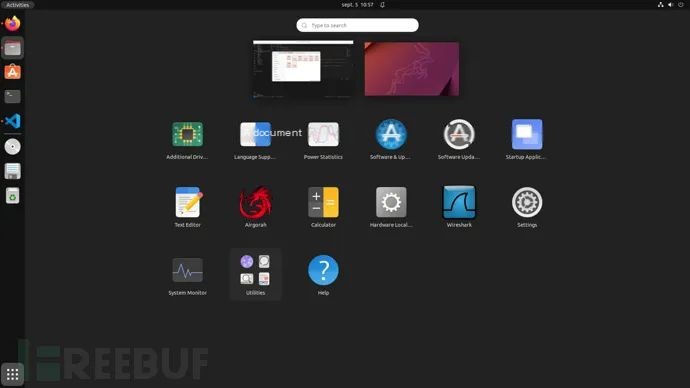 />
/>
Or you can run Airgorah directly from the command line tool:
pkexec airgorahAirgorah Interface Selection
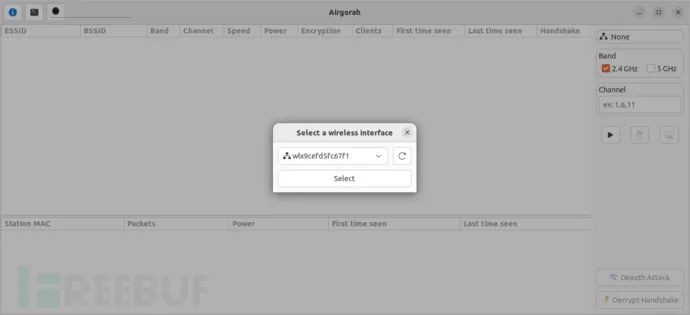
Airgorah Wireless Network List
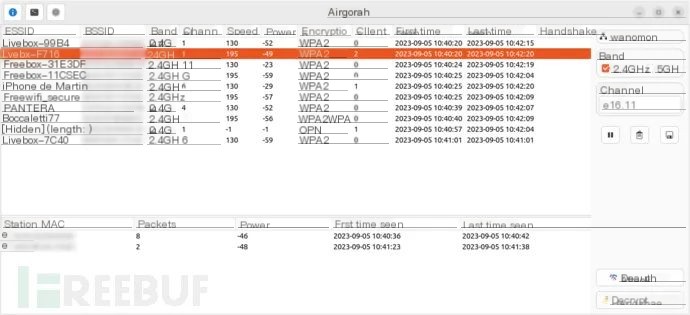
Airgorah WiFi List
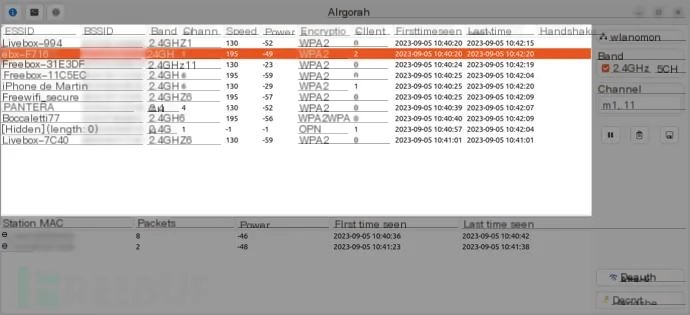
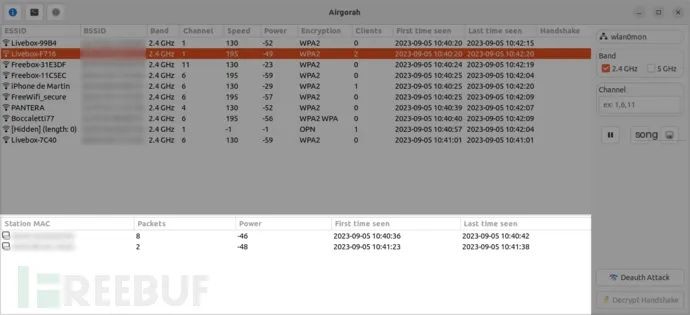
Client List
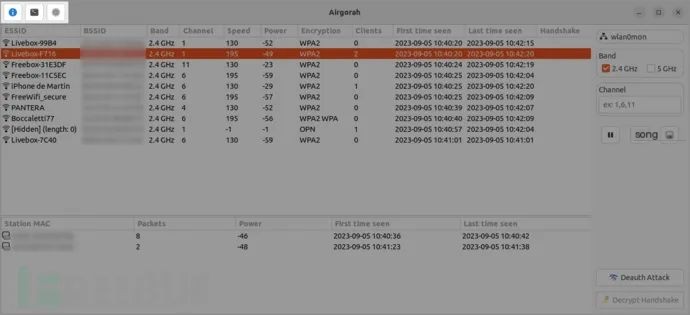
Menu Bar
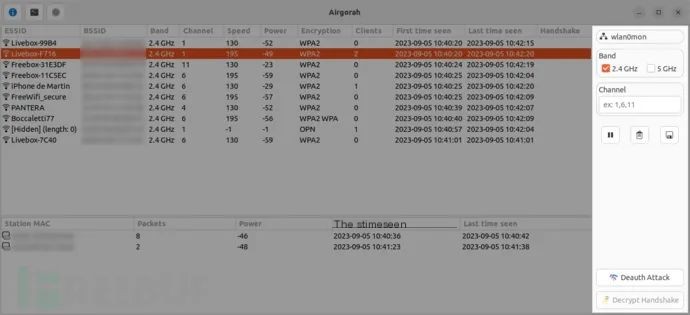
Right Sidebar
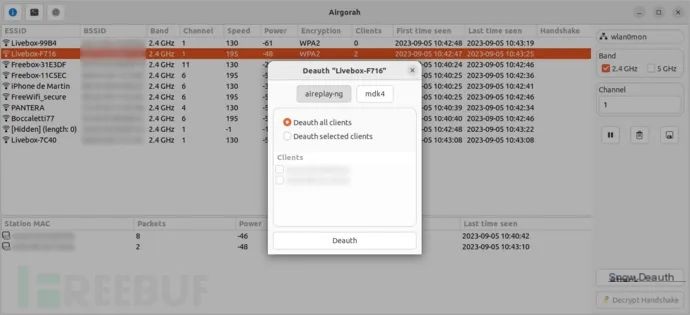
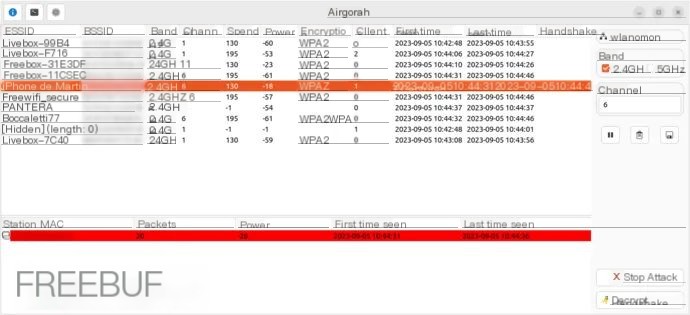
Deauthentication
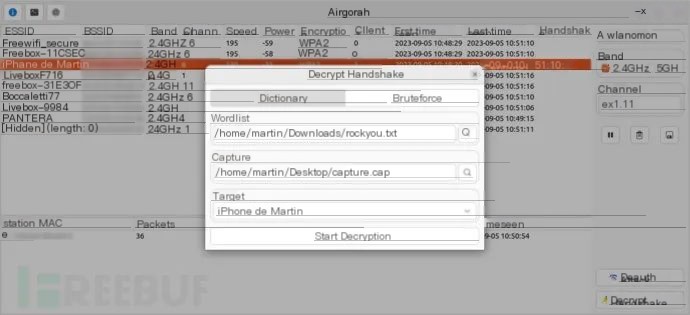
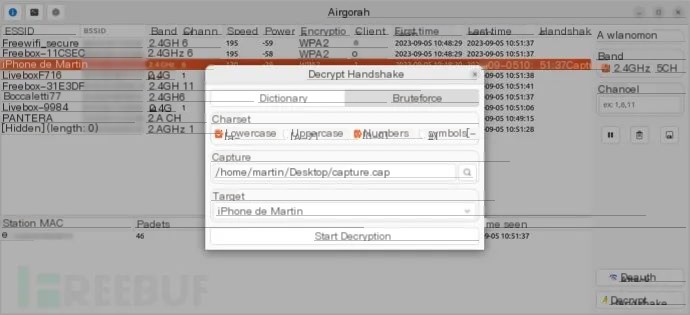
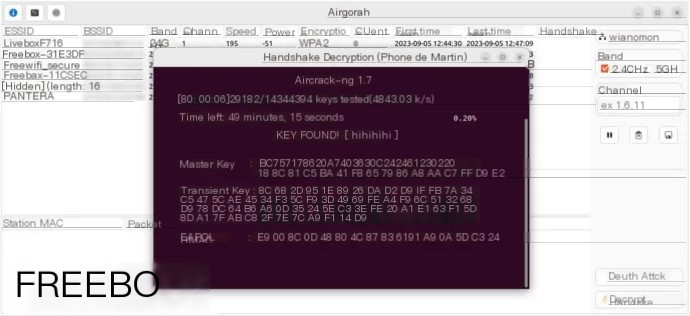
Decrypt Handshake Packets
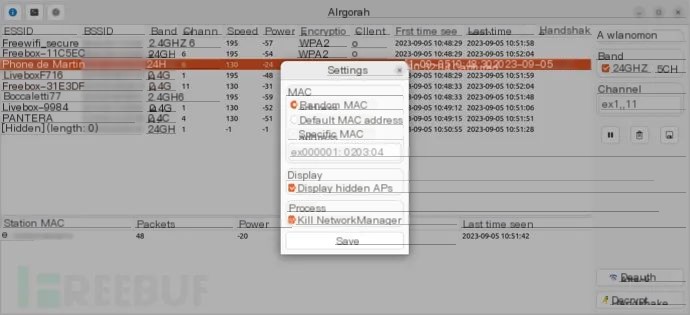
Settings Interface
License Agreement
This project is developed and released under the MIT open source license.
Project Address
Airgorah: